
News
Agriculture in Africa: How Mastercard Foundation scholars are helping increase the continent’s productivity

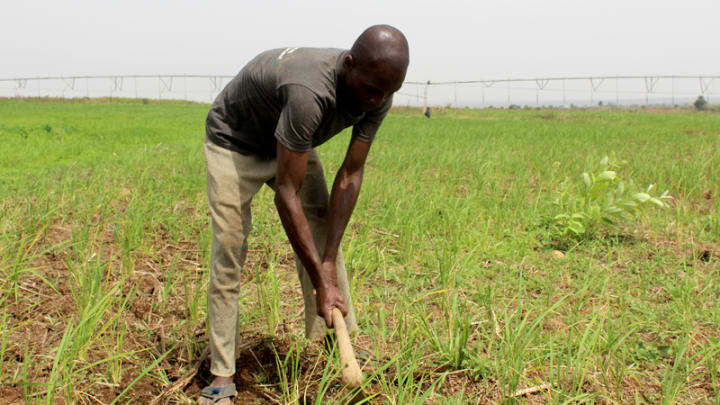
A 2019 McKinsey report shows that 60% of Africans are engaged in subsistence farming. It constitutes 23 per cent of the continent’s GDP and is one of the most critical sectors for development.
Feed Africa (https://bit.ly/3Adv8Du), a report by the African Development Bank Group, states: “Africa has 65% of the world’s remaining uncultivated arable land, abundant fresh water and some 300 sunny days.
Africa’s potential to meet not only its own food needs, but those of the rest of the world as well, is abundantly clear.
The Mastercard Foundation Scholars Program fosters the development of Africa’s future leaders in a variety of sectors, including agriculture Scholars are committed to giving back to their communities by using their skills, knowledge and networks to address challenges and drive innovation The Scholars Program includes initiatives such as the Scholars Entrepreneurship Fund (SEF), which launched in 2018, and Social Venture Challenge (SVC), a partnership with Resolution Projects entering its seventh year.
Both give fellows and alumni the opportunity to present their ideas and bring them to life.
Since 2016, more than 140 fellows have received grants from Resolution and their companies are distributed in 19 countries 33 per cent of fellows surveyed regarding their companies reported having business related to farming.
In 2016, Mastercard Foundation Scholars Lucia Lebasha and John Awiel, both Kenyans, created an award-winning social entrepreneurship project called Save the Pastoralist Initiative (STPI), motivated by their childhood experiences of hunger and severe drought in Turkana, Kenya.
This was achieved through his knowledge of sustainable agricultural practices gained through his studies at EARTH University.
The Turkana people predominantly live a nomadic and pastoral way of life in which their animals are the main source of food and wealth.
Turkana is also one of the driest districts in the country; rainfall is minimal and unpredictable.
The many years of drought have created a constant struggle against hunger and malnutrition and a continuing threat to their livestock and grazing land.
STPI began as an educational communications effort, writing and posting agricultural articles online in local newsletters and on its blog and Facebook page.
Taking these efforts a step further, Lucia and John established a demonstration farm in Lodwar, the economic hub of the region, where they educated traditional herders and youth on the benefits of sustainable farming practices with a focus on agriculture.
While John recently joined EARTH University’s admissions team, responsible for recruiting fellows with a passion for agriculture, Lucia continues to run the project by working with local communities and organizations in Turkana South, Kangirega sub-county.
Currently, the project supports 43 farmers (24 women and 19 men), providing training on agricultural agronomic inputs and links to markets for their products and financial institutions.
Project 7840 was developed by scholars Ernest Chakwera and Nancy Machera in 2016 to alleviate the effects of drought in their village of Khwelewere in the Ntchisi district of central Malawi.
The project helps the people of Malawi to access water for consumption and cultivation, using local resources and promoting the sustainable use of water for the benefit of the community.
It also provides local farmers with support and education on sustainable farming techniques, local market opportunities, and financing options.
Through the EARTH University Graduate Association (UNEGA) Integrated Farm, academics Alex Kyeyune, Fatimah Birungi and Paul Mukuye have created innovative ways to advance agricultural practices and techniques, which have significantly improved health and well-being.
In Uganda, small farmers face various challenges, such as land scarcity, ashy soil and drought, all of which affect productivity.
In 2017, the UNEGA team introduced sustainable farming techniques such as micro-gardening, including vertical, pyramid and bio-intensive farming, through its demonstration farm in Kabubbu Village, Uganda.
These techniques have helped farmers double and triple their yields without increasing the land needed for cultivation.
In balance with sustainability efforts, ecological micro-gardens use recyclable materials such as plastics, old tires, and bags, and 75 per cent of the manure used is organic.
In the last three years, the team has trained 54 households, who have in turn shared what they learned with more than 100 households.
Of the 154 households, 60 have established small gardens in their residences.
UNEGA has also worked with ten schools to educate school principals about the value of school gardens, and five have established their own gardens.
Thanks to their efforts, 16 women-led businesses have had access to a steady supply of vegetables to sell.
In 2020, Esnath Divasoni from East Harare, Zimbabwe, developed innovative and indigenous farming techniques that are eco-friendly and mitigate malnutrition and food insecurity.
She ventured into uncharted territory: cricket breeding.
Although plucking worms from trees and collecting bugs in plastic bags was common for her growing up, she felt it could be more abundant and regular than just seasonal.
https://bit.ly/3QLLyd2 An alumnus of the CAMFED (Campaign for Women’s Education) Mastercard Foundation Scholarship, which awarded her secondary education, after which she proceeded to EARTH University, Costa Rica, Esnath is now one of the two main trainers in the CAMFED Agriculture Guide Program.
They have trained 320 agricultural guides in various districts who are now passing on their knowledge to other women across the country.
Her edible insect production unit is a 5-by-7-meter eco-room lined with rows of large blue and green tubs stacked on two shelves on her parent’s farm in Marondera.
The Mastercard Foundation Scholars Program, through initiatives such as SVC and SEF and university associations such as EARTH University, which focuses on entrepreneurship and transformational leadership in agriculture, provides Scholars with opportunities to address challenges in communities, develop entrepreneurial skills, and harness agriculture for impact.
their communities positively.
In doing so, they create opportunities that foster learning and leadership for themselves and their peers. (NAN)

US authorities slam Air Peace boss, Onyema, with fresh fraud charges

Report: NUPRC has not approved $1.3bn Shell Renaissance deal

There’s a plan to derail Tinubu’s petroleum industry revolution

NNPCL’s acquisition of OVH: Reps member, Miriam Onuoha, slams Atiku, says oil and gas sector should not be politicised

Fidelity Bank affirms commitment to data protection, strong corporate governance

NGX rates Fidelity Bank highest on corporate governance

Like Saudi Aramco, NNPC Ltd under Kyari is creating value for Nigerians

NNPCL FY’23: Kyari stands tall in spite of disruptors’ intrigues

Arewa groups accuse Ugochinyere of plot to blackmail Speaker Abass, deputy, call for probe

CNPP and its failed evil campaign against NNPCL, Kyari

Arewa youths slam Dangote, say ‘you can’t dictate fuel price’

Warn Agbese over false allegations against NNPCL, NMDPRA, group tells reps speaker

1XCUP 2024: 20 teams to battle for N20m as competition kicks off August 5
Paris 2024 Olympic table tennis draw announced
