
News
VP Osinbajo lists SDGs as crucial to economic cooperation

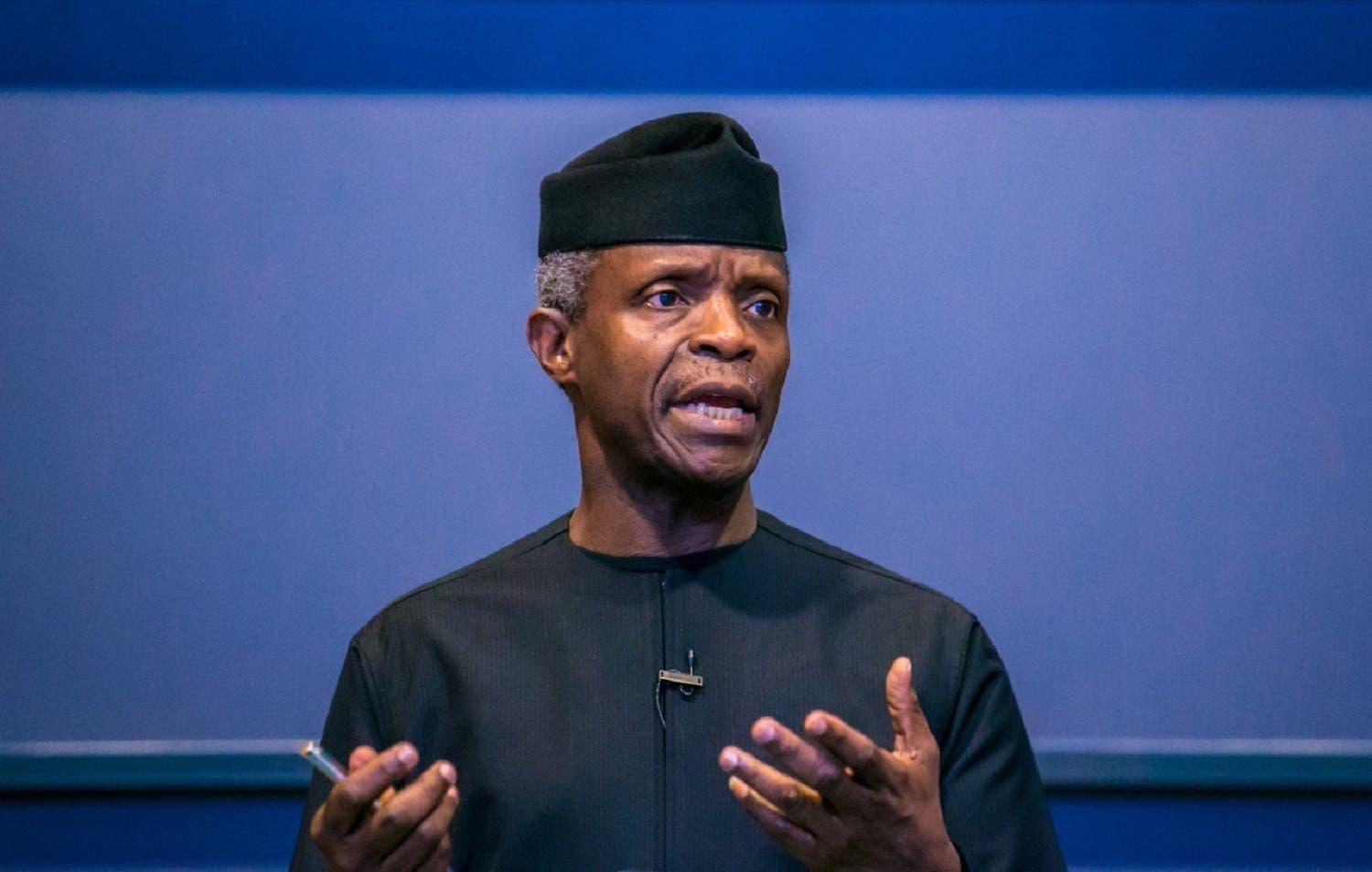
Vice President Yemi Osinbajo said on Monday that the Sustainable Development Goals (SDGs) are important for achieving strong economic cooperation between governments around the world.
Osinbajo pointed this out in Abuja at the opening of a capacity workshop on Africa’s Voluntary National Reviews for the 2022 High-Level Political Forum (HLPF) and The Taming of Agenda 2063.
Vice President, Fice Representative, Budget and National Planning, Ms Zainab Ahmed, said that the strategic partnership embedded in the SDGs had provided Nigeria with a huge implementation context.
He said that Nigeria had established six SDG Innovation Hubs, one in each geopolitical zone to achieve the SDGs and their effective implementation.
Osinbajo said the idea was to provide an opportunity for states to seize and dialogue with all relevant stakeholders to accelerate innovative solutions.
He said the idea was also aimed at prioritizing social protection as a tool to overcome bottlenecks and expand financing options to accelerate the achievement of the SDGs in Nigeria.
According to him, since the adoption of the AU Agenda 2063 and the UN Agenda 2030, Nigeria has embarked on a process of taming the agendas at the national and sub-national levels.
Osinbajo said that the new National Development Plan (PND) 2021-2025 had strategies aimed at achieving the goals established in each of the goals of both agendas.
He said that the capacities of policymakers were being strengthened to ensure their implementation in an integrated and coherent manner to facilitate an inclusive implementation process across all relevant sectors.
The Vice President said that Nigeria had been proactive in addressing the effects of the COVID-19 pandemic and had reached a milestone; even in the midst of the slowdown in economic activities resulting from the pandemic.
“By addressing the gaps created, the Government’s National Economic Recovery and Sustainability Plan was introduced to cushion some of the harsh effects of the global meltdown.
“Other progress made in the country included efforts to improve food security and nutrition through a Multisectoral Food and Nutrition Plan.
“The National Medium-Term Development Plan 2021-2025 has been released and is in the public domain, while the National Long-Term Development Plan, dubbed ‘Nigeria Agenda 2050,’ is in the process of being finalized,” he said.
He said that the Federal Government had also developed national pathways for food system transformation, the result of an exploratory dialogue in Nigeria.
Osinbajo said the dialogue was as recommended by the UN that countries should dialogue to identify challenges facing food from farm to dining table.
He said that the objective was to accelerate the achievement of the SDGs, since 2021-2030 was recognized as a decade of action to accelerate the achievement of the SDGs.
In her remarks, Princess Adejoke Orelope-Adefulire, Senior Special Assistant to the President on SDGs, said that the HLPF was part of the follow-up and review mechanisms for the 2030 agenda for sustainable development.
He said the HLPF should encourage member states to conduct regular and inclusive reviews of progress at the national and sub-national levels.
“It is a pleasure to state that Nigeria submitted its First Voluntary National Review (VNR) to the HLPF in July 2017.
“Nigeria’s first VNR outlined the institutional dimensions for creating an enabling policy environment for the implementation of the SDGs through the Economic Growth and Recovery Plan (ERGP) (2017-2020).
Similarly, in July 2020, Nigeria introduced its second VNR with a specific focus on critical issues of poverty and an inclusive economy.
“Health and wellness, education, gender equality, an enabling environment for peace and security, as well as partnerships and means of implementation.
“This approach was based on Nigeria’s current development priorities as well as the cardinal goals of the administration led by President Muhammadu Buhari,” he said.
Princess Gloria Akobundu, National Coordinator, African Union Development Agency-New Partnership for Africa’s Development (AUDA-NEPAD), Nigeria, said the workshop was aimed at supporting the national capacities of African Union member states.
He said that the area of support was to generate results on the implementation of the SDGs and the 2063 Agenda that will be presented at the next High-Level Political Forum.
Akobundu said the forum was scheduled for July under the auspices of the United Nations Economic and Social Council.

US authorities slam Air Peace boss, Onyema, with fresh fraud charges

Report: NUPRC has not approved $1.3bn Shell Renaissance deal

There’s a plan to derail Tinubu’s petroleum industry revolution

NNPCL’s acquisition of OVH: Reps member, Miriam Onuoha, slams Atiku, says oil and gas sector should not be politicised

Fidelity Bank affirms commitment to data protection, strong corporate governance

NGX rates Fidelity Bank highest on corporate governance

Like Saudi Aramco, NNPC Ltd under Kyari is creating value for Nigerians

NNPCL FY’23: Kyari stands tall in spite of disruptors’ intrigues

Arewa groups accuse Ugochinyere of plot to blackmail Speaker Abass, deputy, call for probe

CNPP and its failed evil campaign against NNPCL, Kyari

Arewa youths slam Dangote, say ‘you can’t dictate fuel price’

Warn Agbese over false allegations against NNPCL, NMDPRA, group tells reps speaker

1XCUP 2024: 20 teams to battle for N20m as competition kicks off August 5
Paris 2024 Olympic table tennis draw announced
