
Energy
PIB: NAEE calls for clarification on 30% border exploration revenue

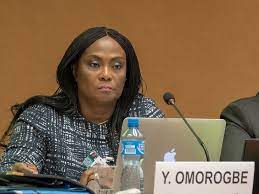
Professor Yinka Omorogbe, chairman of the Nigerian Energy Economics Association (NAEE), called for clarification on transferring 30% of oil and gas profits from NNPC Limited to the border exploration fund, as recommended in the recently adopted Petroleum Industry Bill.
Omorogbe appealed at the Nigerian Energy Conservation Association’s 14th annual conference in Abuja on Monday.
The Nigerian News Agency (NAN) reports that the National Assembly adopted the GDP on July 1, which had raised much controversy over the issues of the host community and income transfers.
She congratulated the National Assembly for the adoption of the bill as it was necessary for the growth of the sector.
Those with the actual numbers should release them for clarity, she said, as it will help reduce the controversy over the percentages.
“In this season of change, we cannot be left behind. We cannot be the country that remains stuck in debilitating discussions about whether or not a bill that will provide a new legal framework for the oil industry should pass due to controversial clauses that can be amended.
“As the nation debates the bill, there is a need to focus on its actual content and not on interpretations that are not always supported by facts.
“It is important for those who can, to get out of real numbers and avoid current discussions about percentages, based on the perception that they are referring to the same thing when in fact they are not. not the case.
“Every day we hear about three per cent versus 30 per cent. three per cent of what? ,” she said
It will be recalled that according to article 9 (4) of the GDP chamber project, the Border Exploration Fund will be 10 per cent of the rents on petroleum exploration licenses and 10 per cent of the rents on petroleum mining leases. ; and 30 per cent of the oil and gas profits of NNPC Limited as in the production sharing, profit sharing and risk servicing contracts.
The fund will be applied to all basins and undertaken simultaneously.
It also reads in section 9 (5) NNPC Limited is to transfer the 30 per cent profit oil and profit gas to the escrow account of the border exploration fund dedicated to the development of border areas only.
Omorogbe asked how 10 per cent became 30 per cent and urged stakeholders and those involved to offer more explanation for people to understand.
Commenting on the impact of COVID-19 on global economies, she said the world’s poor were hit hardest by the pandemic
“The global coronavirus pandemic that has continued to ravage the world since the start of 2020 has become the biggest global challenge, exacerbating global poverty but serving to underscore that there is now the need for radical change.
“An estimated 689 million people, or about nine per cent of the world’s population, lived in extreme poverty in 2020.
“Seventy per cent of these people are in Africa and one hundred million of them are in Nigeria.
“It recently succeeded India as the poverty capital of the world, with the unenviable position of being the country with around 90 million people living in extreme poverty.
This is especially tragic when you consider that India has over a billion people and Nigeria has 200 million, ” she said.
According to her, this seems to mean that the virus and its various mutations could exist for a while.
She called for a strategic solution from participants and all stakeholders to help create a new approach to solving challenges related to the oil and gas sector.
In his welcome speech. Petroleum Technology Development Fund (PTDF) executive secretary Dr Bello Gusua said the pandemic had significantly affected African countries collectively and individually.
He said the effect was characterized by a decrease in the gross domestic product (GDP) and its growth, loss of jobs, increase in poverty, inflation among others.
“Although current economic indices show gradual stability, especially in the price of crude oil compared to last year, when the pandemic reached its peak.
“It is clear that before it can return to the same or higher GDP levels that existed before the crisis, the oil and gas industry will have to evolve and adapt a relevant strategic response,” he said.
He added that African OPEC member countries must have strategic plans to develop the sector for the growth of economies.
He assured that the PTDF’s intervention would continue to be available for the development of the sector.
“Today’s meeting aims to explore the energy sector’s strategic responses to COVID-19 and the impact on African economies, in the wake of this new framework and momentum to normalize the path to economic stability, it is certain that capacity building will play a major role in this upward transition.
“On that note, PTDF’s intervention will always be available to support the industry,” he said (NAN)

US authorities slam Air Peace boss, Onyema, with fresh fraud charges

Report: NUPRC has not approved $1.3bn Shell Renaissance deal

There’s a plan to derail Tinubu’s petroleum industry revolution

NNPCL’s acquisition of OVH: Reps member, Miriam Onuoha, slams Atiku, says oil and gas sector should not be politicised

Fidelity Bank affirms commitment to data protection, strong corporate governance

NGX rates Fidelity Bank highest on corporate governance

Like Saudi Aramco, NNPC Ltd under Kyari is creating value for Nigerians

NNPCL FY’23: Kyari stands tall in spite of disruptors’ intrigues

Arewa groups accuse Ugochinyere of plot to blackmail Speaker Abass, deputy, call for probe

CNPP and its failed evil campaign against NNPCL, Kyari

Arewa youths slam Dangote, say ‘you can’t dictate fuel price’

Warn Agbese over false allegations against NNPCL, NMDPRA, group tells reps speaker

1XCUP 2024: 20 teams to battle for N20m as competition kicks off August 5
Paris 2024 Olympic table tennis draw announced
