
Economy
FG to sustain 2020 budget funding amid GDP contraction

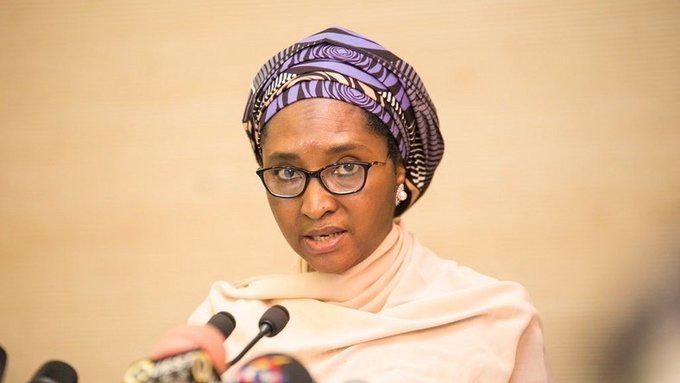
The federal government has expressed its determination to continue funding the 2020 budget to ensure that the economy recovers as projected, even as the country’s Gross Domestic Product (GDP) contracted by -6.10 percent in the second quarter of 2020.
The Minister of Finance, Budget and National Planning, Mrs. Zainab Ahmed, who made the disclosure on behalf of the government noted that the government remains committed to fully funding the 2020 Amendment Budget as well as the economic sustainability plan (ESP), to accelerate the fiscal responses to the deteriorating economic situation nationwide.
Recall that in the recent GDP report by the National Bureau of Statistics (NBS), both oil and non-oil sectors of the economy recorded negative growths in the second a quarter of the year, a situation many financial analysts believe does not look good for the country.
However, Ahmed stated that “Federal Ministry of Finance, Budget, and National Planning is releasing the 2020 capital budget vote to ministries, department, and agencies (MDAs) based on their approved Economic Sustainability and implementation plans.
Specifically, the Ministry has already released capital votes for all federal MDAs at a minimum of 50 percent and is in the process of releasing targeted funds to cash-back priority capital projects.
“Under the enhanced fiscal management framework, optimal treasury operations, as stated, would be key to ensure that time-sensitive expenditures are prioritised over less critical spend; cash management is enhanced to accelerate the conversion of liquidity into the achievement of optimal outputs and outcomes; and financial controls are strengthened to detect and eliminate instances of waste, funds misappropriation and corruption.”
Speaking further, the minister disclosed that the Federal Government is also supporting states to contain the health and economic challenges arising from the COVID-19 pandemic as well as the decline in oil revenues due to price and production challenges.
The government is implementing an enhanced consequence management framework to assess the impact of current spending by MDAs as well as to inform future allocations to MDAs. A suite of sanctions is being finalised to enforce this consequence management Framework, she said.
Ahmed further stressed that the government’s anticipation of the impending economic slowdown which it had communicated to the public much earlier and accordingly the various initiatives it introduced early as a response to cushion the economic and social effects of the pandemic may have contributed to dampening the severity of the pandemic on growth.
On the fiscal side, she alluded to a robust financing mechanism being designed to raise revenue to support humanitarian assistance, in addition to special intervention funds for the health sector.
Additionally, she stated that adjustments to the national budget as well as emergency financing from the concessional lending windows of development finance institutions were critical in supporting the government’s capacity to meet its obligations.
On the monetary side, a moratorium on loans, credit support to households and industries, regulatory forbearance, and targeted lending and guarantee programmes through NIRSAL were some of the measures implemented in response to the pandemic during the second quarter.
She added that “Considering complementary monetary policy and real sector interventions, the Central Bank of Nigeria (CBN) is intervening with a suite of monetary policy interventions to complement the aforementioned fiscal policy reforms such as; Diagnostic testing and laboratory research efforts; reducing the interest rate on CBN intervention facilities from nine percent to five per cent with a 1-year moratorium, creating N50 billion targeted credit facility and injecting N3.6trillion into the banking sector; and expansion of the government’s social investment programme.”
Accordingly, she says that while the federal government anticipates the third and fourth quarters will reflect the continued effects of the slowdown, the fiscal and monetary policy initiatives, robust response to the challenges posed by the COVID-19 pandemic, and preparedness of healthcare workers and other front-line responders will greatly contribute to limiting the most negative economic effects of the current downturn.
As Nigeria’s economy progressively returns to normal commercial activity, “We must remain vigilant to mitigate the negative impact of the COVID-19 Pandemic and avoid the emergence of a second wave,” Ahmed cautions.

US authorities slam Air Peace boss, Onyema, with fresh fraud charges

Report: NUPRC has not approved $1.3bn Shell Renaissance deal

There’s a plan to derail Tinubu’s petroleum industry revolution

NNPCL’s acquisition of OVH: Reps member, Miriam Onuoha, slams Atiku, says oil and gas sector should not be politicised

Fidelity Bank affirms commitment to data protection, strong corporate governance

NGX rates Fidelity Bank highest on corporate governance

Like Saudi Aramco, NNPC Ltd under Kyari is creating value for Nigerians

NNPCL FY’23: Kyari stands tall in spite of disruptors’ intrigues

Arewa groups accuse Ugochinyere of plot to blackmail Speaker Abass, deputy, call for probe

CNPP and its failed evil campaign against NNPCL, Kyari

Arewa youths slam Dangote, say ‘you can’t dictate fuel price’

Warn Agbese over false allegations against NNPCL, NMDPRA, group tells reps speaker

1XCUP 2024: 20 teams to battle for N20m as competition kicks off August 5
Paris 2024 Olympic table tennis draw announced
