
Economy
AfCFTA has to be backed with adequate policies – Lawan

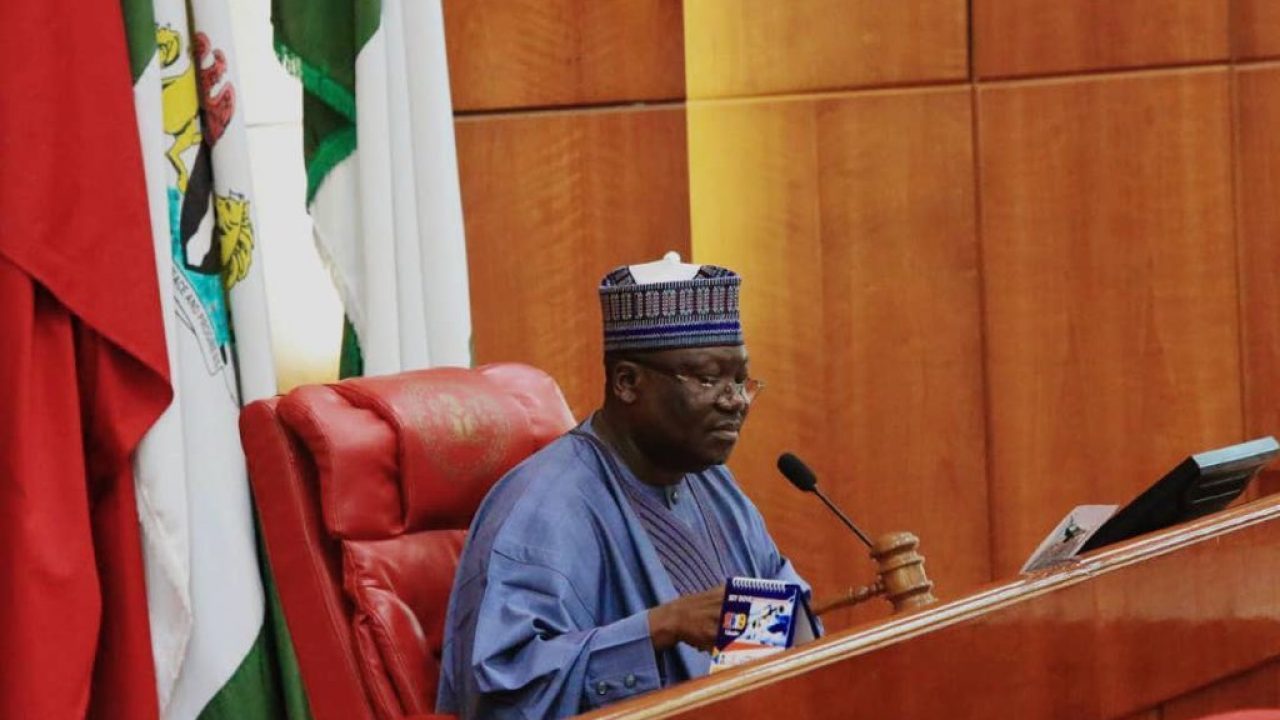
President of the Senate, Ahmad Lawan, has stated that for the African Continental Free Trade Agreement (AfCFTA) to yield the intended results, it must be backed by requisite legal frameworks, right policies and robust implementation.
Lawan made this known when he received a visiting delegation from the African Continental Free Trade Area, led by its newly elected Secretary-General, Wamkele Mene, on Tuesday in Abuja.
The senate president, who was represented by the Deputy Senate Leader, Ajayi Boroffice, said that the intent behind Nigeria’s decision to sign the agreement was to benefit Africans on the continent and outside it.
According to Lawan, aside facing the challenges of unemployment and underemployment, which have been a trigger for both regular and irregular migration, the economies of African countries have been characterised by low productivity, reduced efficiency, and the problem of limited resources.
He, therefore, described the AfCFTA as “a step in the right direction for the growth of African economies, through limited restrictions, leading to the stimulation of trade, commerce, and industry.
“In signing the AfCFTA and depositing the instrument with the African Union Commission, our countries made a statement on the determination of our collective economic fate,” he said.
“This fate is in our hands, through requisite legal frameworks, right policies, and a robust implementation.
“The initial momentum from the signing of the agreement needs to be continued for a greater continental impact, to benefit Africans, both on the continent and outside it.
“Nigeria’s action in signing is not just an evidence of our commitment to the spirit of Africa, but a sign of our trust in a unified economic growth. The multiple benefit of the arrangement is also not lost on us.
“As the biggest market and economy on the continent, we have a strategic role to play in the evolution and stabilisation of the African economy. We are ready to expand the possibilities through our status, with your confidence in us, and the demands of posterity.”

US authorities slam Air Peace boss, Onyema, with fresh fraud charges

Report: NUPRC has not approved $1.3bn Shell Renaissance deal

There’s a plan to derail Tinubu’s petroleum industry revolution

NNPCL’s acquisition of OVH: Reps member, Miriam Onuoha, slams Atiku, says oil and gas sector should not be politicised

Fidelity Bank affirms commitment to data protection, strong corporate governance

NGX rates Fidelity Bank highest on corporate governance

Like Saudi Aramco, NNPC Ltd under Kyari is creating value for Nigerians

NNPCL FY’23: Kyari stands tall in spite of disruptors’ intrigues

Arewa groups accuse Ugochinyere of plot to blackmail Speaker Abass, deputy, call for probe

CNPP and its failed evil campaign against NNPCL, Kyari

Arewa youths slam Dangote, say ‘you can’t dictate fuel price’

Warn Agbese over false allegations against NNPCL, NMDPRA, group tells reps speaker

1XCUP 2024: 20 teams to battle for N20m as competition kicks off August 5
Paris 2024 Olympic table tennis draw announced
